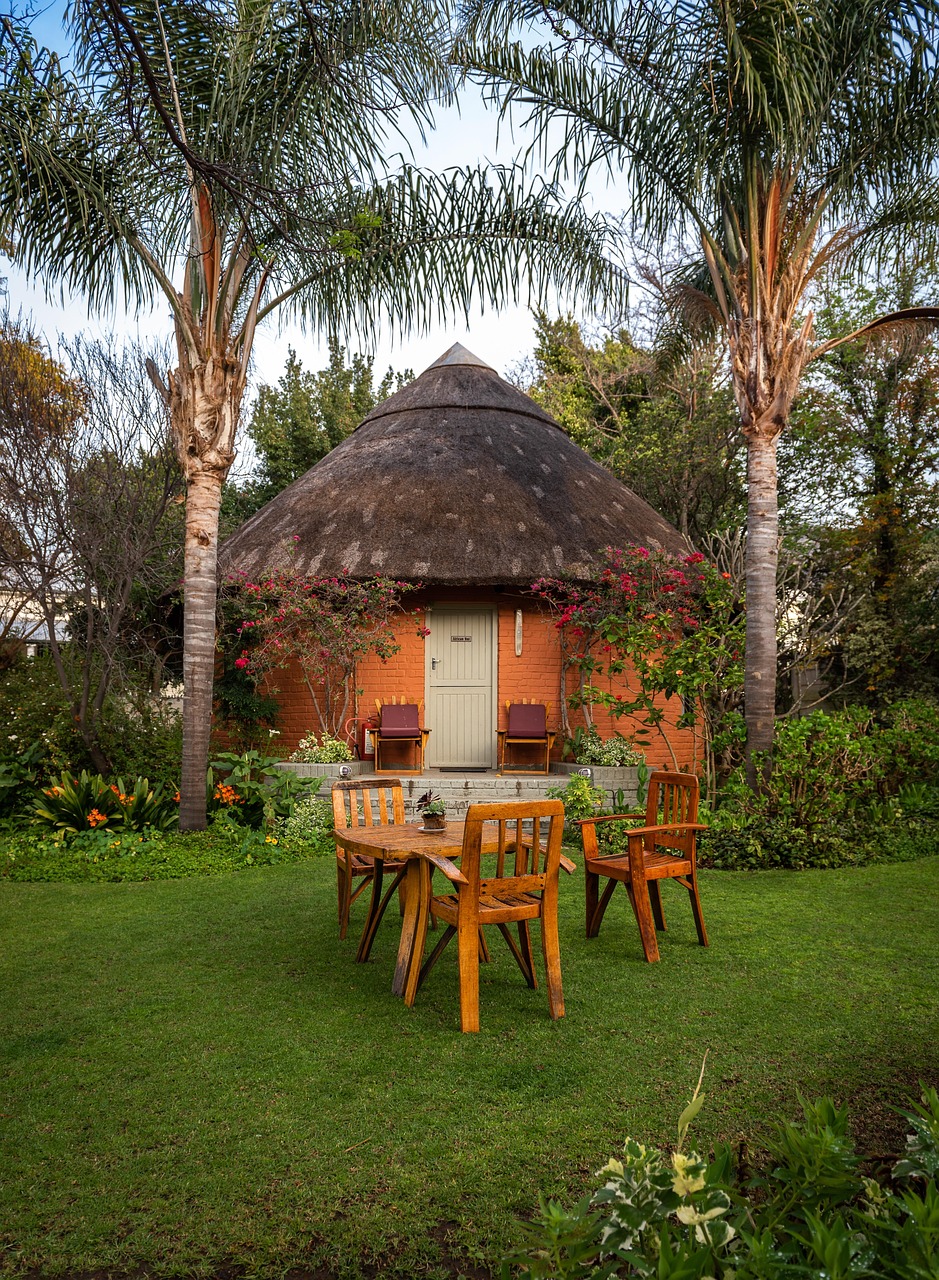
An Outdoor Room
Garden Rooms, and the Bohemian Instinct to Live Outside
A garden room is not a garden. It is not, really, a room either. It is the small negotiation between the two — the moment you drag a chair out past the door and decide, quietly, that this patch of grass, this corner of brick, this square of gravel between the rosemary and the fence, is now somewhere you live. A cushion appears. Then a lantern. Then, one Tuesday in June, an old wool blanket you meant to throw away but didn't, folded over the arm of a chair that used to belong to your grandmother.
That is the bohemian part. Not the aesthetic — the instinct. The refusal to accept that outside is only for passing through.
The cottage tangle
Boho garden rooms almost always begin with a cottage garden — or at least with cottage-garden manners. Nothing is in a straight line. The roses lean. The catmint spills over the path and no one cuts it back. The foxgloves seeded themselves last year and are standing exactly where they want to stand, which is, of course, in the middle of everything. Delphiniums, hollyhocks, poppies that lasted a single afternoon and were worth it. Lavender gone woody at the base. A clematis eating the shed.
A cottage garden is not designed so much as allowed. Which is why it makes such a good room. Walls of hedge and hollyhock. A ceiling of leaves. A floor that shifts from moss to gravel to warm brick as the sun moves. You are indoors and outdoors at once, which is the oldest bohemian trick in the book.
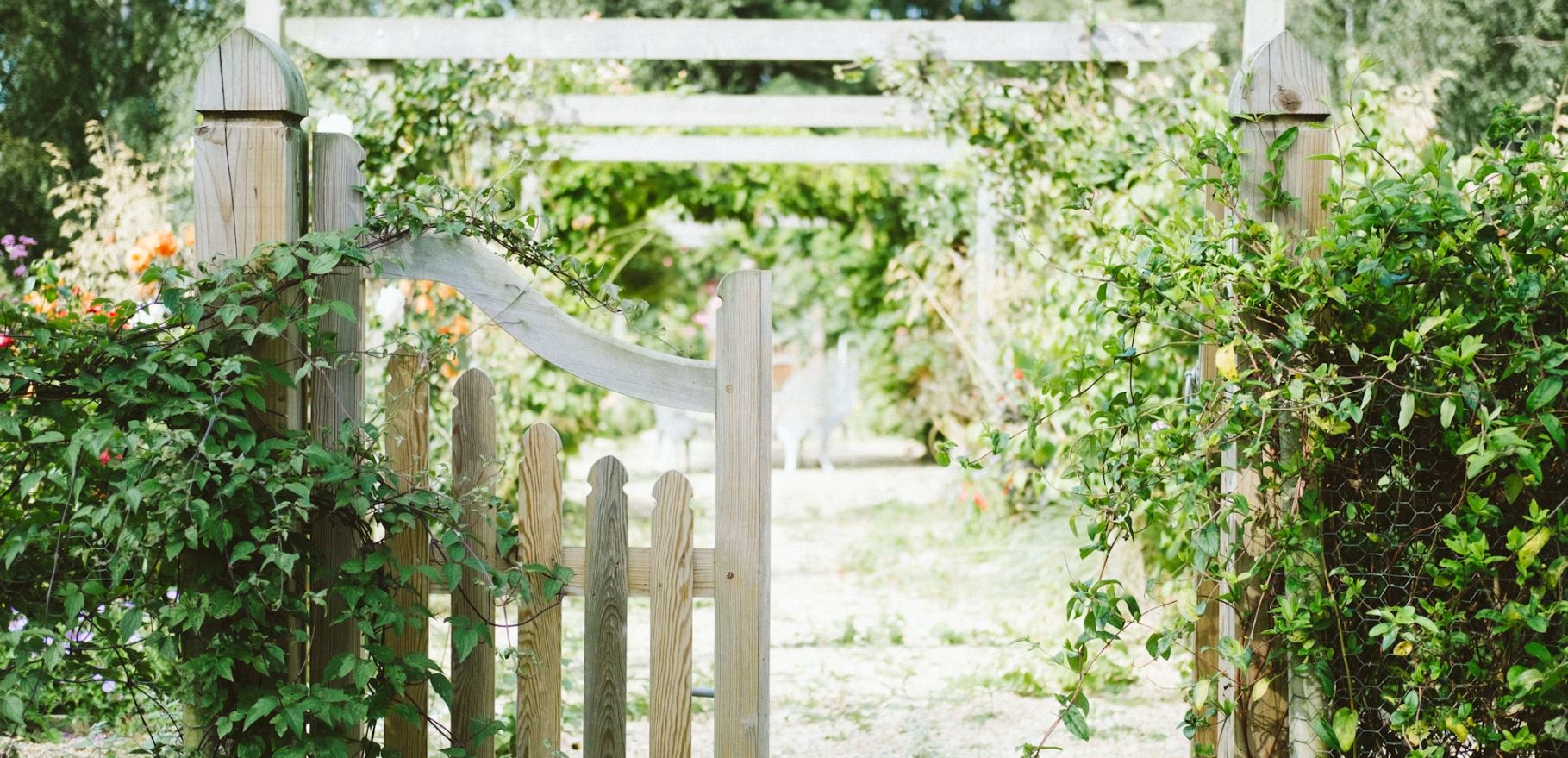
Vintage, because new things do not yet know your weather
A boho garden room is nearly always assembled from things that have already lived a life. A cast-iron bench with three coats of paint chipping off it. An enamel jug from a car boot sale, standing in for a vase. A little wrought-iron table that wobbles exactly the way it wobbled at your aunt's. Terracotta pots gone silver-green with age. A mirror on the fence — yes, on the fence — catching a bit of extra sky.
New things are perfectly nice and completely wrong. They have not yet been rained on. They have not been forgotten under the elder tree for a winter and dragged out again, more beautiful for it. A garden room needs pieces that already know how to be left out.
A room made of edges
The trick, and it really is a trick, is to make the room feel enclosed without building any walls. A low box hedge on one side. A run of hazel hurdles on the other. A rambling rose eating an old ladder that's been leaned, on purpose, against the fence. A curtain of jasmine over a rusted arch. Bunting, if you're not above bunting — and we are not. String lights strung a little too low, so you have to duck once, and remember you're inside something.
Then a rug. Yes, outside. A flat-weave kilim you don't mind losing to the weather, or an old dhurrie the dog has already claimed. The rug is the floor of the room. The rug is what tells you this is not a lawn — this is a sitting room.
Light, and the small ceremony of dusk
A garden room is really at its best around six in the evening, when the light goes long and gold and the bees get slow. This is when boho earns its keep. You light the lantern on the table. You light the tea lights in the jam jars along the fence. You light, if you're serious, the little strand of café bulbs strung between the pear tree and the shed. Nothing overhead, ever. Nothing bright. A garden room at night should feel like a room you are getting away with.
A pot of tea, later a glass of something. A book you keep meaning to read and, tonight, actually will. The moths come. The swifts scream past overhead one last time. Somebody's cat walks along the top of the fence and pretends not to see you.
A boho starter list, if you're just beginning
Not a shopping list. A permission slip.
- One chair you love more than it deserves. Paint it, or don't.
- A small table that wobbles. This is a feature, not a fault.
- Something climbing something else — jasmine, honeysuckle, a rose that will misbehave.
- A rug you will not mourn when the weather finds it.
- One lantern. Then, later, a great deal more light than one lantern.
- A pot of herbs near enough that you can reach the mint from where you sit.
- A blanket. Always a blanket. British summers, and every other kind, require it.
The point, if there has to be one
A boho, vintage, cottage-garden room is not really about the garden. It is about being the kind of person who sits in one. Who eats supper under the elder in July. Who reads by a paraffin lamp in September when the evenings first turn. Who says: yes, the cushions got a bit damp, and yes, we brought them in, and yes, we will do it all again tomorrow.
A garden room is a small, ongoing argument with the idea that a home ends at its walls. It doesn't. It never has.